

Your safer neighbourhood team
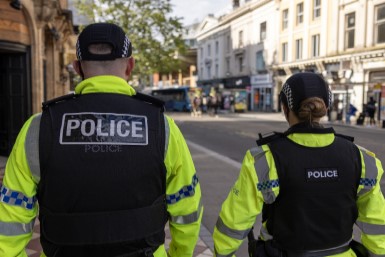
Local policing is at the very heart of what we do – we want Lancashire to be a better place to live, work and visit.
We operate across three ‘divisions’ – East, West and South. Each of these divisions has many specialist officers dedicated to keeping you safe including neighbourhood policing teams.
These consist of Neighbourhood Policing Officers, Task Force Officers, including Rural Task Force Officers, and Police Community Support Officers. They work together with colleagues across the force to tackle local policing priorities and keep our communities safe.
Lancashire is committed to neighbourhood policing and the three pillars that underpin it – engagement, problem-solving and targeting activity.
To tell us what you think of your area and what sort of issues you think we should be tackling, take part in Lancashire Talking.
Crimes and priorities
-
Priority:
Action taken:
-
Priority:
Another priority identified by Stanah ward residents through Lancashire Talking is currently:
Road Safety
Action taken:
Road Safety - Keeping Wyre’s Roads Safe
Making our roads safer for everyone is a key focus for the Wyre Neighbourhood Policing Team and our partners. We’re working hard to tackle behaviours that put lives at risk, and your support plays a big part in that.Mobile Phone use
By using a mobile device when driving, the driver is distracted and not in control of the vehicle. We will and do prosecute for this with drivers receiving £200 fine and six penalty points. It’s important for young drivers to remember, If you get six points within the first two years of passing your test you will lose your licence.Speeding
If speeding is an issue where you live, you can report it online through the Lancashire Road Safety Partnership. When concerns are raised, we may carry out Community Road Watch sessions or run targeted speed enforcement in problem areas.School Drop-Off and Pick-Up
We understand how worrying unsafe driving and parking outside schools can be for parents and local residents. Our officers regularly visit schools to promote safe behaviour, share advice through schools and social media, and work closely with Wyre Borough Council’s Parking Enforcement team to deal with persistent problems.Anti-Social Driving & Drink/Drug Driving
Dangerous or irresponsible driving has no place on our roads. We continue to carry out focused patrols and enforcement operations to keep our communities protected.How You Can Help
If you see dangerous driving or parking, please report it via the Lancashire Police website or speak directly with your local neighbourhood officers.
Together, we can help make Wyre’s roads safer for everyone. -
Priority:
The top priority identified by Stanah ward residents through Lancashire Talking is currently: Nuisance Motorbikes / E-bikes / E-scooters
Action taken:
Nuisance Motorbikes, E-Bikes, E-Scooters
Over the last year, our teams have focused on the issues that matter most to the community, and this includes one of the most complained about issues, E-Bikes and E-Scooters.Having devised an operation to specifically tackle anti-social behaviour involving off‑road motorbikes, e‑bikes, e‑scooters and adapted pedal cycles, we have seized and destroyed over 1000 E-bikes in Lancashire, which is a significant number aimed at tackling this community concern.
We have drawn up plans for a pioneering educational awareness course for young riders and their parents/guardians which will highlight the significant risks to themselves and other road users when they are being used illegally and in a dangerous and anti-social manner. The success of this operation has been recognised nationally with other forces making contact with Lancashire to learn from our best practice and the team being nominated for the National Problem-Solving Awards.
What are the rules?
You can ride an electric bike, or an 'electrically assisted pedal cycle' (EAPC), without a license or insurance if you're 14 or over.An electric bike:
* must have pedals that you can use to propel it
* can have more than two wheels, for example a tricycle
* must have an electric motor that can run continuously at a maximum power of no more than 250 watts
* must have no electrical assistance once you reach 15.5 miles per hour (mph)If your electric bike fails to meet any of these requirements it needs to be taxed and insured as either a motorcycle or a moped.
-
Priority:
Stanah Ward residents have also highlighted parking as a concern.
Action taken:
Parking issues are generally handled by your local council, property managers, or the police, depending on whether the problem is on public roads, private property, or involves obstruction.
Local Council Responsibilities
For most parking problems on public streets, your local council is the first point of contact. Councils manage parking restrictions, enforce yellow lines, and issue penalty charge notices for violations such as parking in permit zones without a permit or blocking access across a dropped kerb. They also handle pavement parking in areas where it is prohibited and can provide mediation services for disputes between neighbours.Police Involvement
The police typically get involved when a vehicle is causing an obstruction, such as blocking a driveway or preventing access to your property, or if a vehicle is abandoned and poses a safety risk. For non-emergency issues, you can contact the police via 101. However, routine parking violations like double yellow lines are usually enforced by the council, not the police.